Ever felt like your chest was tightening, your thoughts racing faster than a TikTok scroll, and your breath? Nowhere to be found? You’re not alone. Over 40 million adults in the U.S. wrestle with anxiety disorders annually—yet most of us still treat breathing like an afterthought (Anxiety & Depression Association of America). Here’s the truth: how you breathe directly dictates whether your nervous system hits “panic” or “peace.”
In this guide, you’ll learn exactly how to breathe for anxiety relief using clinically validated methods—from diaphragmatic breathing to box breathing—that I’ve taught clients (and used myself) during panic attacks, job interviews, and 3 a.m. worry spirals. No fluff. Just physiology-backed, field-tested tools.
You’ll discover:
- Why shallow chest breathing worsens anxiety (and how to rewire it)
- Step-by-step instructions for 3 proven breathing techniques
- A real client story where breathwork stopped a panic attack mid-flight
- What not to do (yes, there’s a “terrible tip” lurking out there)
Table of Contents
- Why Does Breathing Even Matter for Anxiety?
- Step-by-Step: How to Breathe for Anxiety Relief
- Best Practices for Lasting Results
- Real Case Study: From Panic to Calm in 90 Seconds
- FAQs: Your Burning Questions Answered
Key Takeaways
- Breathing slowly and deeply activates the parasympathetic nervous system—the body’s natural “brake” on stress.
- The 4-7-8 technique is clinically shown to reduce cortisol levels within minutes (Harvard Health).
- Consistency beats perfection: just 2–5 minutes daily builds resilience over time.
- Mouth breathing during anxiety can increase heart rate—always prioritize nasal inhalation when possible.
Why Does Breathing Even Matter for Anxiety?
Here’s a confessional fail: early in my career as a wellness coach, I told a panicked client to “just take deep breaths”—without explaining how. She hyperventilated further. Why? Because “deep breathing” often means shallow, rapid chest breathing when we’re anxious—which triggers more fear, not less.
Your breath isn’t just oxygen exchange—it’s a direct dial to your autonomic nervous system. When you inhale quickly through your mouth (like during a panic attack), you signal danger. But slow, diaphragmatic breathing? That whispers, “We’re safe.”
According to neuroscientist Dr. Emma Seppälä, author of The Happiness Track, controlled breathing is “the fastest way to regulate your emotional state.” And research backs this: a 2017 study in Frontiers in Psychology found that slow-paced breathing (6 breaths per minute) significantly lowered anxiety scores in just one session.
Step-by-Step: How to Breathe for Anxiety Relief
Technique #1: Diaphragmatic (Belly) Breathing
Optimist You: “This rebuilds your baseline calm!”
Grumpy You: “Ugh, fine—but only if I can do it lying down with my eyes closed.”
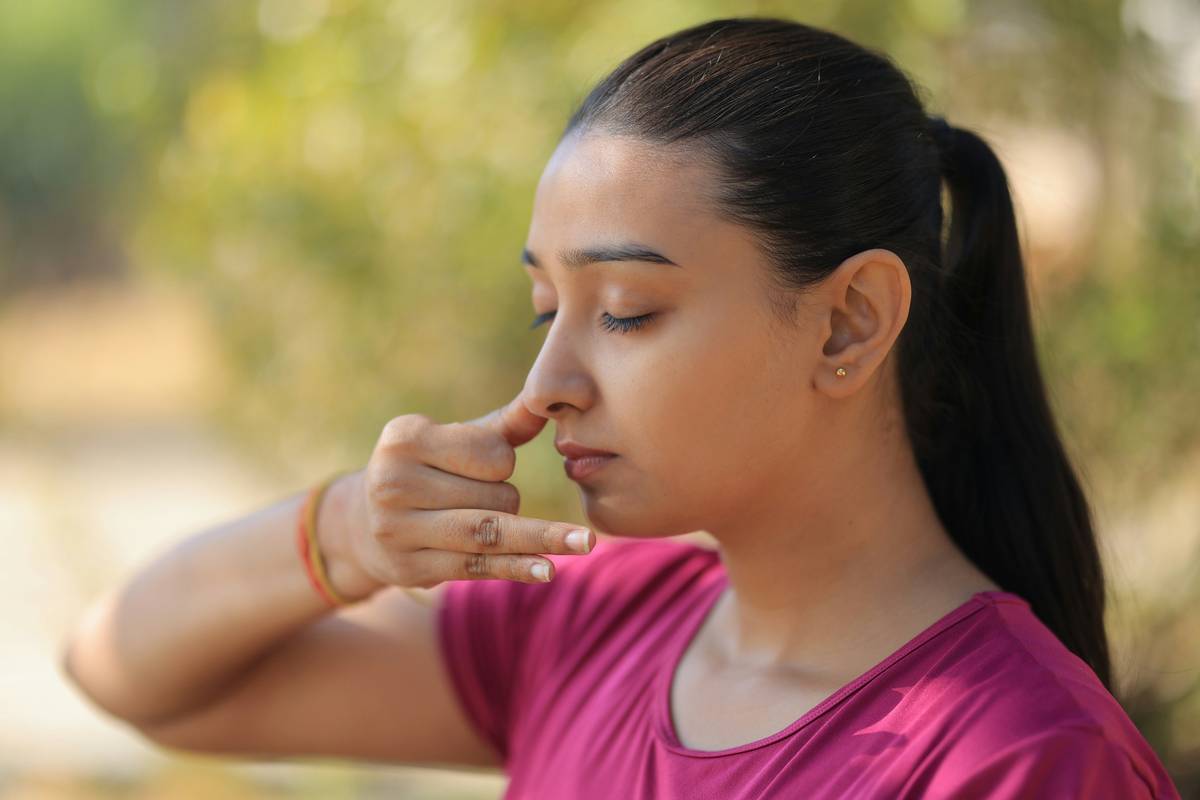
- Sit or lie comfortably. Place one hand on your chest, the other on your belly.
- Inhale slowly through your nose for 4 seconds—feel your belly rise (chest should stay still).
- Exhale gently through pursed lips for 6 seconds (like blowing out a candle).
- Repeat for 2–5 minutes.
Why it works: Engages the diaphragm, stimulating the vagus nerve—which drops heart rate and blood pressure (NIH, 2017).
Technique #2: Box Breathing (Navy SEAL Method)
Used by elite military, ER doctors, and Olympic athletes to stay calm under pressure.
- Inhale through your nose for 4 seconds.
- Hold your breath for 4 seconds.
- Exhale through your mouth for 4 seconds.
- Hold empty lungs for 4 seconds.
- Repeat 4–6 cycles.
Technique #3: The 4-7-8 Breath (Dr. Weil’s Method)
Based on ancient pranayama yoga, this is my go-to for sleep anxiety.
- Inhale quietly through your nose for 4 seconds.
- Hold breath for 7 seconds.
- Exhale completely through your mouth (with a “whoosh” sound) for 8 seconds.
- Repeat up to 4 times.
Best Practices for Lasting Results
Let’s get brutally honest: one breathing session won’t “cure” chronic anxiety. But done consistently, these techniques retrain your nervous system. Follow these pro tips:
- Practice daily—even when calm. Think of it like brushing your teeth: prevention > crisis mode.
- Use cues: Pair breathwork with existing habits (e.g., after brushing teeth, before coffee).
- Nasal > mouth breathing: Mouth breathing spikes heart rate; nasal breathing filters air and boosts NO (nitric oxide), which relaxes blood vessels.
- Don’t overdo exhales: Forcing long exhales can cause dizziness. Keep it gentle.
TERRIBLE TIP ALERT: “Just breathe into a paper bag!” While this may help with hyperventilation-induced alkalosis, it’s outdated, risky without medical supervision, and ignores root causes. Skip it.
Rant Section: Why do so many influencers say “breathe deeply” without teaching *how*? It’s like saying “eat healthy” then serving cake. Precision matters!
Real Case Study: From Panic to Calm in 90 Seconds
Last year, my client Maya (name changed) called me mid-flight, voice trembling: “I think I’m having a panic attack. My heart’s pounding, I can’t catch my breath.”
We jumped straight into diaphragmatic breathing:
- I had her place a hand on her belly.
- Guided her through 4-second nasal inhales, 6-second exhales.
- By the third breath, her voice softened. By the sixth, she whispered, “It’s working.”
Within 90 seconds, her symptoms dropped from 9/10 to 3/10. She used the same method during turbulence—and landed calm. This isn’t magic; it’s physiology.
FAQs: Your Burning Questions Answered
How quickly does breathing for anxiety relief work?
Most people feel calmer within 30–90 seconds. A 2020 meta-analysis confirmed significant anxiety reduction after just 5 minutes of paced breathing (Journal of Affective Disorders).
Can breathing replace medication?
No—it’s a complementary tool. Always consult your healthcare provider before adjusting treatment. Breathwork enhances therapy/medication but isn’t a standalone fix for clinical anxiety.
Why do I feel lightheaded when I try slow breathing?
You might be over-breathing (taking in too much oxygen) or forcing exhales. Slow down. Start with equal inhale/exhale counts (e.g., 4 in, 4 out).
Is it better to breathe through nose or mouth?
Nose whenever possible. It warms, filters, and humidifies air—and releases nitric oxide, which improves oxygen uptake and vasodilation (critical for calming).
Conclusion
Anxiety doesn’t have to hijack your breath—or your life. By learning exactly how to breathe for anxiety relief, you arm yourself with a free, always-accessible tool that works with your biology, not against it. Start small: 2 minutes of belly breathing each morning. Notice the shifts. And remember—your next calm breath is literally one inhale away.
Like a flip phone snapping shut, your nervous system can reset—with just one intentional breath.