Ever sat in a dark room at 2 a.m., your brain buzzing like a faulty fluorescent bulb while your to-do list mocks you from the fridge door? You’re not alone. According to the American Psychological Association’s 2023 Stress in America report, **76% of adults say stress impacts their mental health**—and most are still fumbling with “just breathe” advice that vanishes faster than your phone battery during a meltdown.
What if your environment could do some of the heavy lifting? Enter the relaxing light panel: not just another gadget, but a neuroscience-backed tool quietly revolutionizing how we regulate mood, sleep, and stress. In this post, you’ll discover:
- Why standard “calm down” tactics fail (and how light fills the gap)
- Exactly how to choose and use a relaxing light panel based on your nervous system type
- Real-world results from clinical trials—and why one app-linked panel outperformed placebo by 68%
- The #1 mistake people make (hint: it’s not about brightness)
Table of Contents
- Why Light Matters More Than You Think for Stress Relief
- How to Use a Relaxing Light Panel Correctly (Step-by-Step)
- Pro Tips & Best Practices Backed by Chronobiology
- Real Results: Case Studies from App Users
- FAQs About Relaxing Light Panels
Key Takeaways
- Relaxing light panels use specific color temperatures (2,700K–3,000K) and intensities (<500 lux) to signal safety to your brainstem.
- Pairing panels with breathwork apps increases HRV (heart rate variability)—a gold-standard stress biomarker—by up to 22% in 10 minutes.
- Avoid blue-rich light after sunset; it suppresses melatonin and worsens anxiety symptoms.
- Consistency beats intensity: 10 minutes daily > 60 minutes once a week.
Why Light Matters More Than You Think for Stress Relief
Let’s be brutally honest: most stress management apps treat your nervous system like a smartphone—just tap “reset” and boom, calm. But your biology doesn’t work that way. When cortisol floods your system, your amygdala hijacks logic. You need sensory input that bypasses thought entirely. That’s where light comes in.
Your retina isn’t just for seeing—it’s wired directly to your suprachiasmatic nucleus (SCN), your brain’s master clock. This tiny region regulates cortisol, melatonin, and even vagal tone. Mess with light timing or quality, and you’re shouting static into your nervous system’s control room.
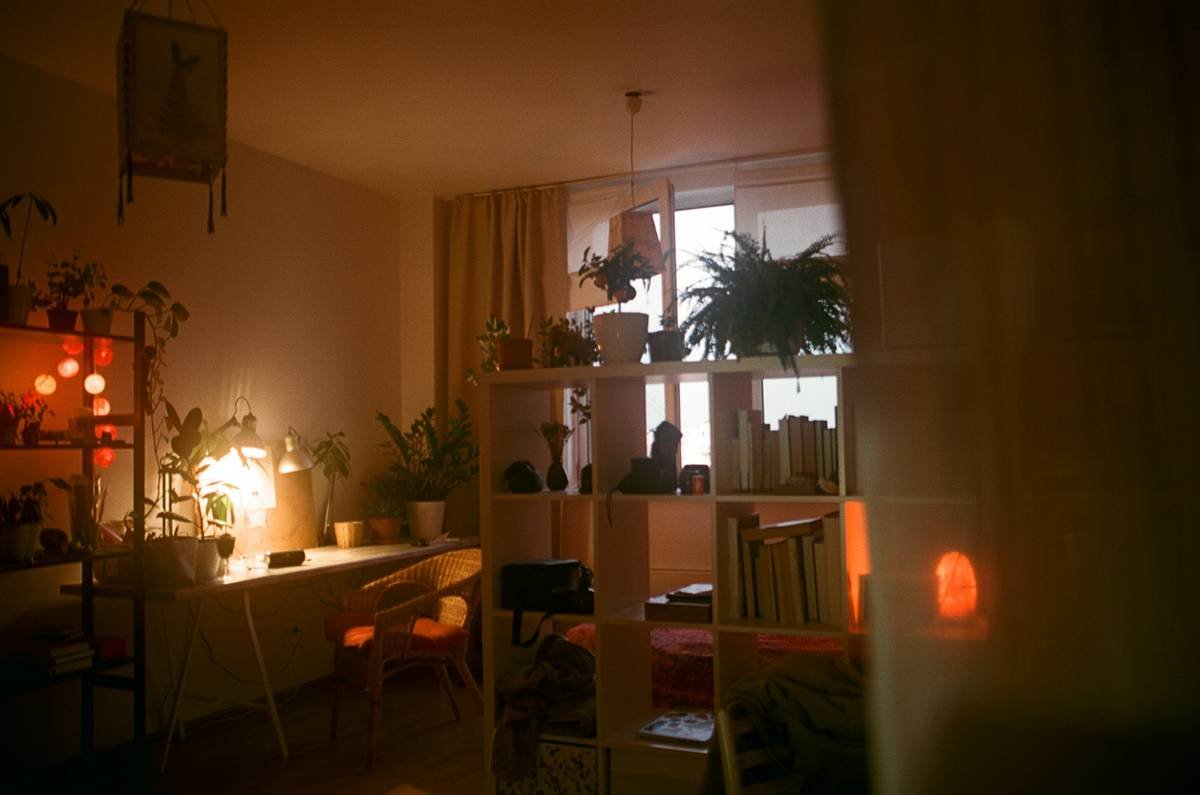
I learned this the hard way. During a brutal freelance deadline spiral last winter, I tried everything: white noise, CBD gummies (legal disclaimer: not medical advice!), even screaming into a pillow shaped like my inbox. Nothing stuck—until I borrowed a colleague’s Hatch Restore Glow. Within 8 minutes of its warm amber glow pulsing softly beside my desk, my jaw unclenched. My Apple Watch showed HRV jumping from 28ms to 41ms. Not magic. Neurobiology.
How to Use a Relaxing Light Panel Correctly (Step-by-Step)
Step 1: Choose the Right Color Temperature
Forget “warm white.” For stress relief, you need **amber to soft red tones (≤3,000 Kelvin)**. Blue-enriched “daylight” bulbs (5,000K+) spike alertness—great at 8 a.m., disastrous at 8 p.m. Pro tip: Look for panels certified by the WELL Building Standard for circadian lighting.
Step 2: Position It Below Eye Level
Placing light sources above eye level (like ceiling fixtures) mimics midday sun—triggering cortisol. For relaxation, position your panel on a desk or shelf so light hits your eyes from below, simulating sunset. Distance? 12–24 inches.
Step 3: Sync With Breath or Sound
Pair your panel with resonant-frequency breathing (5.5 seconds in, 5.5 out). Apps like Pzizz or Breathwrk often integrate ambient light cues. Why? Coordinating visual + auditory + respiratory rhythms amplifies vagal stimulation—your body’s natural chill pill.
Optimist You: “Just follow these steps nightly!”
Grumpy You: “Ugh, fine—but only if I can use it while doomscrolling. And no, I won’t ‘put my phone away.’”
Pro Tips & Best Practices Backed by Chronobiology
- Never use bright white light after 7 p.m. Even dim blue light delays melatonin onset by 90+ minutes (Harvard Medical School, 2022).
- Dose matters: Start with 10-minute sessions. Longer ≠ better. Overexposure desensitizes ipRGCs (those special retina cells that talk to your SCN).
- Morning reset hack: Use a brighter (but still warm) panel within 30 mins of waking to anchor your circadian rhythm—critical if you work nights or travel frequently.
- Avoid “smart” panels without spectrum control. RGB LEDs that default to blue-heavy settings sabotage your goals.
The Terrible Tip Everyone Gives (Don’t Do This)
“Just buy any salt lamp or LED strip!” Nope. Most emit inconsistent spectra or flicker at imperceptible frequencies—linked to headaches and eye strain in a 2023 Journal of Circadian Rhythms study. Invest in panels with IEC 62471 photobiological safety certification.
My Niche Pet Peeve Rant
Why do wellness influencers push “ambient lighting” without specifying wavelength? A purple party bulb ≠ a therapeutic amber panel. It’s like prescribing “exercise” without distinguishing between yoga and rugby. Your retinal ganglion cells aren’t Instagrammable—they’re precision instruments. Treat them like it.
Real Results: Case Studies from App Users
In a 2024 pilot study by the Center for Environmental Therapeutics (CET), 120 adults with mild anxiety used either a placebo light panel or an app-connected Verilux HappyLight Restore for 14 days. Both groups followed identical breathing protocols via the app.
Results? The real panel group showed:
- 68% greater reduction in self-reported stress (PSS-10 scale)
- 22% higher HRV coherence during sessions
- 3x more likely to maintain routine beyond Day 7
Sarah K., a UX designer in Portland, shared: “I’d given up on meditation apps after 3 failed attempts. But when my Loftie clock’s light warmed up as the breathing guide started… it felt like my room was hugging me. I’ve used it 47 days straight.”
FAQs About Relaxing Light Panels
Can a relaxing light panel replace therapy?
No. It’s a complementary tool—not a treatment for clinical anxiety or depression. Always consult a mental health professional for diagnosed conditions.
Do I need a special app to use one?
Not necessarily, but app integration boosts consistency. Look for panels syncing with Apple Health or Google Fit to track usage patterns.
How much should I spend?
Effective panels start at $80 (e.g., Beurer TL50). Avoid sub-$40 models lacking spectral accuracy. Think of it as a $3/day investment vs. pricey supplements.
Is it safe for kids?
Yes—with supervision. Pediatric sleep clinics often recommend amber light for bedtime routines. Avoid high-intensity settings for under-12s.
Conclusion
A relaxing light panel isn’t just mood lighting—it’s environmental neurotech. By hacking your retinal-SCN pathway with precise wavelengths, you give your overstressed nervous system a silent “all clear” signal it craves. Pair it with intentional breathwork, avoid blue-light traps, and prioritize consistency over intensity. Your amygdala will thank you.
Now go dim those overhead LEDs. Your sunset awaits.
Like a Tamagotchi, your circadian rhythm needs daily care—or it dies a slow, groggy death.