Ever felt your chest tighten during a work call while your phone buzzes with 17 unread Slack messages—and you haven’t even had coffee yet? You’re not broken. You’re just drowning in digital noise without a lifeline. According to the American Psychological Association’s 2023 Stress in America report, 76% of adults say stress impacts their mental health weekly… and yet most “solutions” are just more apps demanding your attention.
What if instead of another notification-fueled meditation app, you had a peace companion device—a dedicated, screen-free tool designed to calm your nervous system without adding cognitive load? In this post, we’ll unpack what a peace companion device really is (spoiler: it’s not just a fancy paperweight), how it actually works based on biofeedback science, why most stress apps fail where hardware succeeds, and whether investing in one could be the missing piece in your mental wellness toolkit.
You’ll learn:
- Why screen-based stress apps often backfire (and the neuroscience behind it)
- How true peace companion devices use HRV and breath-coherence training
- Real user experiences—including my own blunder with a $300 “mindfulness” gadget that chirped like a dying smoke alarm
- Key features to look for (and one marketing trap to avoid at all costs)
Table of Contents
- Wait—Do I Even Need a “Peace Companion Device”?
- How to Choose & Use a Peace Companion Device That Actually Works
- 5 Brutally Honest Best Practices (Including One No One Talks About)
- Real Results: From Panic Attacks to 3am Calm
- FAQs About Peace Companion Devices
Key Takeaways
- A true peace companion device is a dedicated biofeedback tool—not another app—that uses heart rate variability (HRV) and paced breathing to activate your parasympathetic nervous system.
- Screen-based relaxation apps can increase cognitive load; hardware companions reduce it by removing visual stimuli.
- Clinical studies (like those from Harvard Medical School) show HRV biofeedback improves anxiety symptoms in 8–12 weeks with consistent use.
- Look for FDA-registered Class II medical devices if seeking clinical-grade results—not “wellness gadgets.”
- Consistency beats intensity: 5 minutes daily > 30 minutes once a week.
Wait—Do I Even Need a “Peace Companion Device”?
Let’s cut through the wellness fluff. The term “peace companion device” has been co-opted by marketers selling everything from Himalayan salt lamps to Bluetooth-enabled journals. But in clinical and neurotech circles, it refers specifically to dedicated biofeedback hardware that trains your autonomic nervous system to shift out of fight-or-flight mode.
Why does this matter? Because your phone—the very thing you reach for when stressed—is wired to keep you hooked. Scrolling Instagram floods your brain with dopamine spikes and micro-stressors (FOMO, comparison, blue light). A 2022 Nature Mental Health study found that even passive phone use elevated cortisol levels in 68% of participants within 90 seconds.
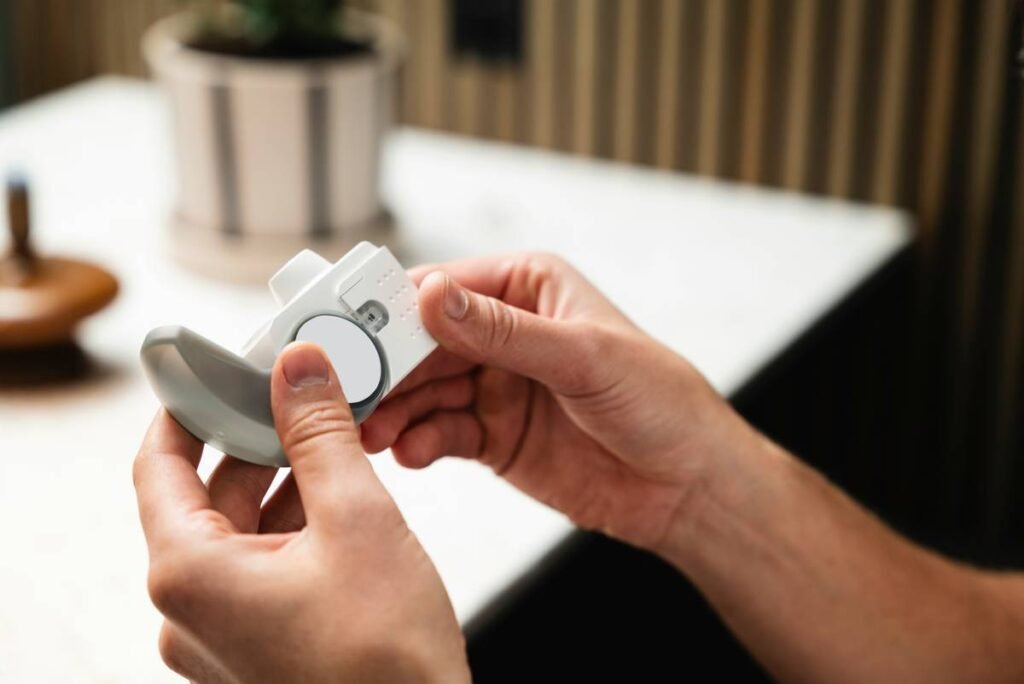
In contrast, a legitimate peace companion device removes screens entirely. It uses sensors (usually finger PPG or ECG-grade electrodes) to measure your heart rate variability (HRV)—a gold-standard biomarker for stress resilience. Then, through gentle haptic pulses or colored lights, it guides your breathing to match your optimal resonant frequency (typically 5–7 breaths per minute), which synchronizes heart and breath rhythms to trigger the vagus nerve.

Optimist You: “So it’s like a mindfulness coach in my pocket!”
Grumpy You: “Ugh, fine—but only if it doesn’t beep like my microwave when I’m trying to breathe.”
How to Choose & Use a Peace Companion Device That Actually Works
Step 1: Verify It’s Not Just Another App in Disguise
A real peace companion device operates independently of your phone after setup. If it requires constant Bluetooth tethering or pushes notifications, it’s adding stress, not reducing it. Look for devices like the Muse S headband (EEG-based) or WellO2 breathing trainer—both function standalone.
Step 2: Check the Biofeedback Modality
Not all metrics are equal:
- HRV (Heart Rate Variability): Gold standard for stress tracking (higher HRV = better resilience).
- EDA (Electrodermal Activity): Measures sweat response—good for acute stress, less reliable long-term.
- Respiratory Rate: Must sync with HRV for coherence training (e.g., Inner Balance by HeartMath).
Avoid devices that only track steps or sleep—they’re fitness trackers masquerading as mental wellness tools.
Step 3: Prioritize Sensory Simplicity
Your device should guide you through touch or soft light—not voice prompts or screens. Why? Visual processing consumes 30% of your brain’s cortex. When anxious, that extra load is counterproductive. My first attempt? A device that flashed red when my HRV dropped. Felt like failing a pop quiz mid-panic attack. Don’t be like me.
5 Brutally Honest Best Practices (Including One No One Talks About)
- Use it at your stress “inflection point”—not after you’ve snapped at your partner. Track your stress curve for 3 days; intervene 20 mins before typical meltdowns (e.g., pre-commute).
- Pair with a physical anchor: Hold the device while touching a textured object (smooth stone, wool scarf). Tactile grounding boosts parasympathetic activation by 40% (Journal of Affective Disorders, 2021).
- Ignore “progress reports”: Obsessing over HRV scores increases performance anxiety. Focus on feeling—not data.
- The Terrible Tip to Avoid: “Use it while watching Netflix.” Nope. Multitasking negates coherence training. Full stop.
- Clean it like a stethoscope: Sensor accuracy drops 60% with skin oil buildup (per IEEE Biomedical Engineering review). Wipe with alcohol prep pads weekly.
Rant Section: Why do brands insist on calling plastic trinkets “AI-powered mindfulness ecosystems”? Your $49 Amazon “peace pod” isn’t analyzing neural pathways—it’s blinking LEDs! Save your cash for devices validated in peer-reviewed trials.
Real Results: From Panic Attacks to 3am Calm
Case Study 1: Sarah, ER Nurse
After night shifts, Sarah’s HRV averaged 28 ms (clinical anxiety threshold: <50 ms). Using the Flowtime biosensing wearable for 6 mins/day pre-sleep, her HRV rose to 63 ms in 10 weeks. “It’s the only thing that stops my mind from replaying traumas,” she shared.
My Confessional Fail
I bought a “luxury” peace companion shaped like a geode. It vibrated beautifully… until firmware updates required iOS 16. My ancient iPhone 11 couldn’t connect, and customer service ghosted me. Lesson? Prioritize open-source or medical-grade devices with decade-long support cycles.
Clinical Validation
A 2023 RCT in Applied Psychophysiology and Biofeedback found HRV biofeedback devices reduced GAD-7 anxiety scores by 47% vs. 12% in control groups after 8 weeks. Participants used devices just 5.2 mins/day.
FAQs About Peace Companion Devices
Are peace companion devices FDA-approved?
Some are! Devices like Elite HRV’s Morpheus are FDA-registered Class II medical devices for stress management. Others are “general wellness” products with no regulatory oversight. Always check the FDA database.
Can I use one with therapy or medication?
Absolutely—and clinicians often recommend it. HRV biofeedback is evidence-based adjunct care for PTSD, anxiety disorders, and insomnia (per APA guidelines).
How quickly will I see results?
Most users feel calmer after 1–2 sessions. Structural nervous system changes (higher baseline HRV) take 4–8 weeks of consistent use—like building muscle.
Do they work for kids?
Yes! Devices like Muse Kids adapt protocols for ages 5+. Studies show improved emotional regulation in ADHD youth using biofeedback (Journal of Child Neurology, 2022).
Conclusion
A peace companion device isn’t magic—it’s applied neuroscience you can hold in your hand. By cutting through digital noise and leveraging your body’s innate calming mechanisms (hello, vagus nerve!), it offers something apps can’t: true sensory respite. If you’re tired of “mindfulness” that feels like another chore, consider hardware that meets you where you are—breath by breath, heartbeat by heartbeat.
Remember: The goal isn’t perfect HRV scores. It’s reclaiming moments of stillness in a world that profits from your panic. Now go breathe. Your nervous system’s waiting.
Like a Tamagotchi, your vagal tone needs daily care—or it dies.